
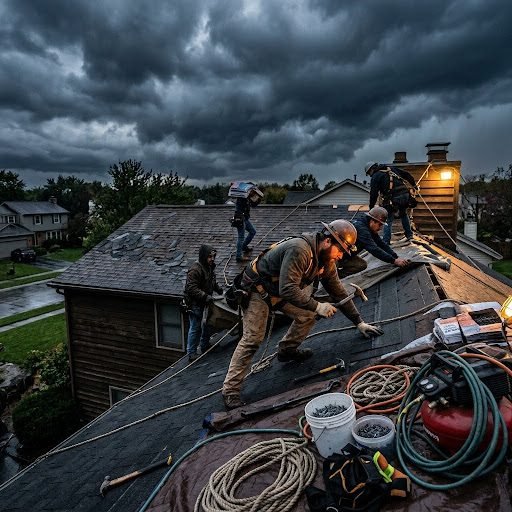
Storms don’t follow schedules. Neither do roof failures. One hour, everything’s fine. The next, you’re watching a water stain spread across your ceiling while rain hammers down outside. It’s a scenario thousands of homeowners face each year—and how fast they respond makes all the difference.
At Dave Adams Roofing, emergency roof service isn’t just a checkbox on a service list. It’s a commitment to showing up when it matters most, with the skills, tools, and experience to stop the damage before it spirals out of control.
What Qualifies as a Roofing Emergency?
Not every roofing issue demands an urgent call, but some situations genuinely can’t wait. Recognizing the difference could save you thousands in repairs.
Signs you need emergency roofing help:
- Visible holes or punctures from fallen branches or flying debris
- Sudden interior leaks during or after heavy rainfall
- Missing or displaced shingles exposing the underlayment
- Sagging roof sections indicating structural compromise
- Damaged flashing around chimneys, skylights, or vents that’s letting water in
These aren’t problems to monitor from a distance. Left unaddressed, even a small breach can lead to soaked insulation, mold growth, damaged drywall, and compromised structural integrity—all within 24 to 48 hours.
Why Fast Response Is Everything in a Roofing Crisis
Water is relentless. Once it finds a way in, it moves fast—seeping into wall cavities, pooling on subfloors, and weakening the materials meant to keep your home standing strong.
That’s why speed matters so much with emergency roof damage. A crew that arrives within hours can install protective tarping, seal the breach, and assess the full extent of the damage before the next wave of bad weather hits. Waiting until the next business day? That’s a gamble most homeowners can’t afford to take.
Dave Adams Roofing prioritizes rapid response for exactly this reason. The team understands that a roofing emergency doesn’t pause for convenience—and neither should the solution.
What the Emergency Roofing Process Looks Like
Homeowners often don’t know what to expect when they make that urgent call. Here’s how a professional emergency response typically unfolds:
Step 1: Immediate Assessment
A trained roofing technician arrives on-site to evaluate the damage. This includes inspecting both the exterior and interior of the affected area to gauge how far the problem extends.
Step 2: Emergency Stabilization
Before any permanent repair begins, the priority is stopping active water intrusion. This often means applying heavy-duty waterproof tarping or temporary patching to protect the home from further exposure.
Step 3: Detailed Damage Report
Once the immediate threat is contained, the crew documents the full scope of damage—essential for homeowners filing insurance claims. Dave Adams Roofing provides clear, thorough documentation to support this process.
Step 4: Permanent Repair Planning
With the home stabilized, the team outlines a repair plan tailored to the specific type and extent of the damage. Whether it’s a targeted shingle replacement or a more extensive structural fix, every recommendation is grounded in a thorough assessment—not guesswork.
Common Causes of Emergency Roof Damage
Understanding what puts roofs at risk helps homeowners stay one step ahead. The most frequent culprits include:
Severe storms and high winds — Wind can lift and strip shingles faster than most people expect, especially on roofs older than 10–15 years.
Falling trees and branches — A single large limb can punch through multiple layers of roofing material, creating an immediate water entry point.
Ice dams — In colder climates, ice buildup along the roof’s edge can force water beneath shingles, causing leaks deep inside the structure.
Hailstorms — Hail cracks and dents shingles, compromising their ability to shed water effectively—damage that often isn’t visible from the ground.
Poor prior repairs — Patchwork fixes from unqualified contractors can fail under pressure, turning a manageable issue into a full-blown emergency.
How Dave Adams Roofing Handles the Unexpected
There’s a real difference between a roofing company that offers emergency service and one that’s genuinely built for it. Dave Adams Roofing has spent years refining the processes, training, and logistics that make emergency response both fast and effective.
The team arrives prepared—not just with tools, but with the experience to make smart decisions under pressure. That means correctly identifying the source of a leak (which isn’t always directly above where the water appears inside), choosing the right temporary materials to hold through additional weather events, and communicating clearly with the homeowner every step of the way.
An emergency roof repair handled by a trusted, licensed professional is one of the most effective ways to protect your home’s value, your family’s safety, and your peace of mind when a crisis strikes without warning. That’s the standard Dave Adams Roofing holds itself to on every call.
Does Homeowner’s Insurance Cover Emergency Roof Repairs?
In many cases, yes—but the details matter. Most standard homeowner’s insurance policies cover sudden, accidental damage caused by events like storms, falling objects, and fire. Gradual deterioration or damage from neglected maintenance is typically excluded.
To strengthen an insurance claim:
- Document the damage with photos and video immediately
- Keep records of any emergency mitigation work performed
- Request a detailed written assessment from your roofing contractor
- Contact your insurer promptly—delays can complicate claims
Dave Adams Roofing works alongside homeowners throughout the claims process, providing the documentation and professional assessments insurers require.
The Cost of Waiting
Procrastination is expensive in roofing. A repair that might cost a few hundred dollars when addressed immediately can balloon into thousands once water damage spreads through ceilings, walls, and flooring. In severe cases, structural repairs can push costs into the tens of thousands.
Beyond the financial toll, prolonged water intrusion creates health risks. Mold can begin developing within 24–48 hours of moisture exposure—a problem that requires professional remediation well beyond the scope of roofing repairs alone.
Acting fast isn’t just smart. It’s protective.
Trust the Team That Shows Up Ready
Roof emergencies test homeowners in the worst moments—during storms, late at night, or when life is already complicated enough. What makes those moments more manageable is having a team on the other end of the phone that knows exactly what to do.
Dave Adams Roofing brings the expertise, equipment, and work ethic to handle emergency situations with precision and care. From the first assessment to the final repair, the goal is always the same: restore your roof, protect your home, and give you back your confidence in the structure above your head.
When your roof needs urgent attention, don’t wait. Reach out to Dave Adams Roofing and get a team that’s ready to respond.
Frequently Asked Questions
How quickly can Dave Adams Roofing respond to a roofing emergency?
Dave Adams Roofing prioritizes emergency calls and works to dispatch a crew as quickly as possible, often the same day, to assess and stabilize the damage.
What should I do while waiting for emergency roofers to arrive?
Move valuables away from the affected area, place buckets or towels to catch dripping water, and avoid going onto the roof yourself—it can be dangerous, especially in wet or windy conditions.
Can emergency roof repairs be done in bad weather?
Temporary measures like tarping can usually be applied in a range of weather conditions. Permanent repairs are typically scheduled once conditions are safe for the crew and allow the work to be done correctly.
Will an emergency repair hold long-term?
Emergency repairs are designed to stabilize and protect your home until a full, permanent repair can be completed. Dave Adams Roofing follows up with a comprehensive repair plan after every emergency response.
How do I know if my damage is an emergency or can wait?
If there’s active water intrusion, visible holes, structural sagging, or displaced roofing materials exposing your home’s underlayment, treat it as an emergency. When in doubt, call—a professional assessment costs far less than undetected water damage.
