
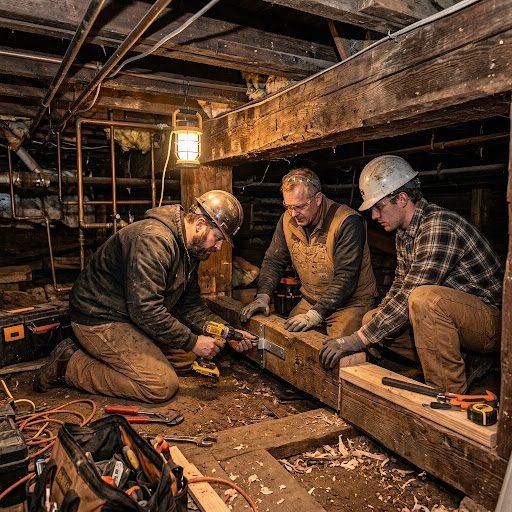
Most homeowners spend their weekends focusing on what they can see—freshly painted walls, updated kitchens, manicured lawns. But beneath every home lies a space that quietly determines the health, comfort, and structural integrity of everything above it. Your crawlspace.
Neglected crawlspaces are far more common than you might think. Moisture builds up. Vapor barriers fail. Insulation deteriorates. Pests move in. And before long, the air you breathe inside your home is being filtered through a damp, contaminated space you’ve never thought twice about. Crawlspace restoration isn’t just a maintenance task—it’s one of the most impactful investments a homeowner can make.
What Actually Happens to an Untreated Crawlspace?
The crawlspace sits between your home’s foundation and the ground beneath it. That positioning makes it highly vulnerable to moisture intrusion, poor ventilation, and biological growth. Over time, these conditions don’t stay contained.
Moisture from the soil evaporates upward—a process known as the stack effect—and travels into your living spaces. This leads to elevated humidity levels, musty odors, and even visible condensation on walls or floors. Wood rot begins to compromise floor joists and beams. Mold colonies establish themselves in the insulation. In severe cases, pest infestations follow.
The troubling part? Most of this damage develops slowly, over months or years, without triggering any obvious warning signs until it’s already extensive.
The Signs That Your Crawlspace Needs Professional Attention
Homeowners often dismiss early warning signs as minor inconveniences. Knowing what to look for can make a significant difference in both repair costs and long-term home health.
Persistent musty or earthy odors inside the home are one of the earliest indicators. If your home smells damp without an obvious source, the crawlspace is a likely culprit.
Uneven or soft flooring suggests wood rot may have already begun affecting the structural elements beneath your feet. This isn’t a cosmetic issue—it’s a safety concern.
Elevated energy bills are another red flag. When insulation in the crawlspace fails, conditioned air escapes more easily, and your HVAC system works harder to compensate.
Visible moisture or standing water in the crawlspace following rain is a clear sign that proper drainage and vapor control measures are not in place.
Pest activity, including rodent droppings, insect trails, or damaged wood, often originates in an unsealed, poorly maintained crawlspace.
What Professional Crawlspace Restoration Involves
Crawlspace restoration is a comprehensive service—not a single fix. A qualified restoration team addresses the full range of issues present, rather than applying surface-level solutions that leave underlying problems intact.
Moisture Control and Encapsulation
The foundation of any effective crawlspace restoration is controlling moisture. This typically begins with encapsulation: lining the crawlspace floor and walls with a heavy-duty vapor barrier that prevents ground moisture from entering the space. In many cases, a dehumidifier is also installed to maintain consistent humidity levels year-round.
Insulation Repair or Replacement
Degraded insulation loses its effectiveness entirely and can harbor mold or pests. Restoration professionals remove old, compromised insulation and replace it with materials suited to the crawlspace environment, improving both energy efficiency and air quality.
Structural Repairs
If wood rot or moisture damage has affected floor joists or support beams, these components need to be repaired or replaced before any other work proceeds. Structural integrity is non-negotiable, and professional restoration teams assess this thoroughly.
Drainage Solutions
For crawlspaces prone to water intrusion, interior drainage systems and sump pumps are often recommended. These systems channel water away from the foundation before it can accumulate or cause damage.
Sealing and Ventilation
Gaps, cracks, and open vents allow outside air—along with moisture and pests—to enter freely. Proper sealing and vent covers form the final layer of protection in a fully restored crawlspace.
The Long-Term Benefits of a Restored Crawlspace
Once professionally restored, a crawlspace becomes an asset rather than a liability. The improvements are felt throughout the entire home.
Indoor air quality improves noticeably. Because a significant portion of the air in any home comes from below, a clean, dry crawlspace directly translates to cleaner air in your living spaces—especially beneficial for those with allergies, asthma, or respiratory sensitivities.
Energy costs decrease. With effective insulation and moisture control in place, homes maintain their temperatures more efficiently. Many homeowners report measurable reductions in monthly utility bills following crawlspace restoration.
Structural longevity is protected. Wood that stays dry doesn’t rot. A restored crawlspace extends the lifespan of your home’s foundational components, protecting one of your most valuable assets.
Property value increases. Buyers and inspectors pay close attention to crawlspace conditions. A fully restored, encapsulated crawlspace is a strong selling point that adds real value at the time of sale.
Peace of mind, frankly, is underrated. Knowing that the space beneath your home is clean, dry, and structurally sound removes a significant source of long-term worry.
Choosing the Right Crawlspace Restoration Service
Not all restoration services are created equal. Experience, thoroughness, and the quality of materials used vary widely across providers. The best crawlspace restoration companies conduct detailed inspections before recommending any work, explain their findings clearly, and stand behind their services with warranties.
Revive Crawlspace Restoration has a skilled team dedicated to protecting every corner of your home from the ground up, delivering lasting moisture control, structural integrity, and cleaner air that homeowners can genuinely feel from the moment the work is complete — it is the kind of service provider worth calling before small problems become expensive ones.
When evaluating any provider, ask about their inspection process, the materials they use for encapsulation, how they handle structural damage, and what kind of follow-up or warranty they offer. A reputable company will answer these questions confidently and in detail.
A Healthier Home Starts Below the Surface
The crawlspace may be the least glamorous part of your home, but its condition affects virtually everything above it. Air quality, structural stability, energy efficiency, and long-term home value all connect directly to what’s happening in that low, dark space beneath your floors.
Crawlspace restoration isn’t a luxury reserved for older homes with obvious problems. It’s a proactive investment that pays off in comfort, safety, and savings for years to come. The sooner issues are addressed, the less extensive—and less costly—the restoration process tends to be.
If you haven’t had your crawlspace professionally inspected recently, now is a good time to schedule one. What you don’t know about the space beneath your home can, and often does, affect the quality of life within it.
