
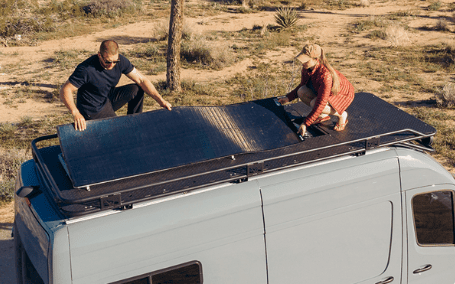
For decades, travelers were limited to rigid solar panels that were bulky, heavy, and difficult to install on curved surfaces. Today’s flexible solar panels offer a practical solution: lightweight, conformal power generation that works with your vehicle’s unique shape and maximizes your adventure time.
Whether you’re living full-time in an RV, embarking on extended van-life travels, or simply want power independence for camping trips, understanding flexible solar panels is essential knowledge. This comprehensive guide explores everything you need to know about harnessing solar energy during your travels.
What Makes Flexible Solar Panels Different?
To understand why flexible solar panels revolutionized travel power, let’s compare them to traditional options:
Rigid Solar Panels
Rigid panels are standard aluminum-framed units familiar from rooftop installations. They’re durable and efficient but weigh considerably more, require specific mounting infrastructure, and create aerodynamic drag on vehicles. Their rectangular shape doesn’t adapt to curved RV roofs or van surfaces.
Traditional Portable Panels
Foldable solar briefcases are portable but take up valuable cargo space and require setup time. They’re excellent for occasional camping but impractical for full-time mobile living.
These are ultra-thin, lightweight panels that conform to curved surfaces. They’re permanently mounted, require minimal infrastructure, reduce wind resistance, and generate power automatically without setup. They’re the practical choice for serious travel.
The key advantage? Flexible panels are always ready. There’s no setup required, no storage considerations, and no decision-making about deployment. Park your vehicle, and power generation begins immediately.
The Technology Behind Flexible Solar Panels
Understanding the basics helps you appreciate their engineering:
Flexible solar panels use thin-film photovoltaic technology—essentially the same science as rigid panels but printed on flexible substrates rather than rigid glass. This allows them to bend slightly (typically up to 30 degrees) without damage.
The result is panels that weigh 60-70% less than comparable rigid panels while maintaining impressive efficiency ratings. A flexible panel weighing just 8 pounds might generate the same power as a 25-pound rigid panel.
This weight advantage is crucial for travelers. Every pound matters when you’re concerned with fuel consumption, vehicle handling, and payload capacity.
Ideal Travel Scenarios for Flexible Solar
Full-Time RV Living
Extended motorhome travel requires reliable power generation. Flexible panels mounted on the RV roof provide continuous charging without relying on campground hookups.
Van Life Adventures
Whether you’re exploring national parks or working remotely from scenic locations, van-mounted flexible panels keep batteries charged and devices powered. Many van converters now consider solar mandatory rather than optional.
Boondocking and Off-Grid Camping
The ability to stay powered while camping in remote locations opens up truly wild camping experiences. You can stay longer, explore further, and remain comfortable.
Nomadic Work and Travel
Digital nomads and remote workers rely on consistent power for laptops, internet equipment, and charging devices. Flexible solar panels enable genuine location independence.
Extended Overland Travel
Cross-continent expeditions, desert exploration, and multi-week adventures all become feasible when you’re generating your own power continuously.
Backup Power for Serious Campers
Even traditional tent campers appreciate flexible panels. Mounted on a small box or portable stand, they keep battery banks charged for lighting, refrigeration, and devices.
Key Advantages That Impact Your Travel Experience
Silent Operation
Unlike generators, flexible solar panels produce zero noise. No disturbing wildlife, no annoying fellow campers, no engine sounds interrupting peaceful mornings.
Zero Ongoing Costs
After the initial investment, solar power is essentially free. No fuel purchases, no generator oil, no spark plugs to maintain.
Environmental Responsibility
Clean energy aligns with the outdoor ethics most travelers embrace. You’re minimizing your environmental impact while pursuing adventures.
Lightweight Installation
Because flexible panels are thin and lightweight, mounting them requires minimal structural reinforcement. Many installations use adhesive backing alone—no drilling holes or damaging your vehicle.
Improved Aerodynamics
Unlike heavy rigid panels that create wind resistance and reduce fuel efficiency, flexible panels conform to your vehicle’s profile, minimizing drag.
Continuous Power Generation
Unlike portable panels requiring deployment, flexible installations generate power automatically whenever there’s sunlight—even on cloudy days.
Space Efficiency
Mounted on existing roof space that would otherwise be unused, flexible panels don’t consume valuable cargo room.
What Size Solar Panel Do I Need
One of the most important decisions when planning solar power is determining appropriate capacity. The question “what size solar panel do I need” doesn’t have a one-size-fits-all answer it depends on your power consumption.
When considering flexible solar panels for your travel setup, you’re essentially asking: how much power do I need to generate versus consume?
Start by calculating your daily power needs:
High-Consumption Travelers
- Running air conditioning units
- Charging multiple devices and laptops
- Operating extensive refrigeration
- Powering water heating systems
These applications might require 400-600 watts of installed capacity or more. Full-time RVers with AC units often opt for multiple flexible panels totaling 800+ watts.
Moderate-Consumption Travelers
- Charging laptops and phones
- Running 12V refrigerators
- LED lighting
- Basic water pumping
These needs typically require 200-300 watts of flexible solar capacity.
Light-Consumption Travelers
- Phone and device charging
- LED lighting
- Small fan operation
These applications work with 100-150 watts.
The actual power generated depends on location, season, and weather. An unshaded flexible panel in ideal sunlight generates closer to its rated capacity, while the same panel in partial shade or winter conditions generates significantly less.
Installation Realities for Different Vehicles
RVs and Motorhomes
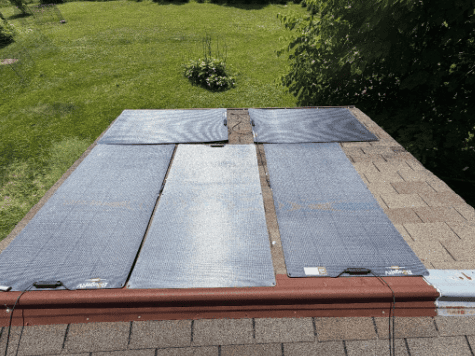
Flat roof space is ideal. Most RV owners install panels in rows, covering as much roof as practical without blocking ventilation or equipment access.
Vans and Sprinter Conversions
Curved roofs pose challenges for rigid panels, but flexible panels adapt perfectly. Many van converters now mount panels across the entire roof profile.
Travel Trailers
The relatively small roof space limits capacity, but even modest systems (100-200 watts) provide meaningful power supplementation.
Pickup Trucks with Campers
Truck camper roofs are often too small for extensive solar, but flexible panels can be mounted on auxiliary structures or ground stands when parked.
Boats
Flexible panels work exceptionally well on boats and sailboats where weight and space are premium concerns.
Choosing Quality Flexible Solar Panels
When evaluating options, quality matters. Look for:
Reputable Manufacturing: Established brands like BougeRV solar panels are engineered specifically for the travel market, not generic industrial products.
Appropriate Certifications: Quality panels meet relevant safety standards and come with realistic warranty coverage (typically 5-10 years).
Proper Waterproofing: Your panels will experience rain, spray, and temperature extremes. Sealed junction boxes and proper cable management prevent moisture intrusion.
Temperature Ratings: Panels perform less efficiently in extreme heat. Quality panels include specifications accounting for real-world conditions.
Realistic Specifications: Be skeptical of efficiency claims. Honest manufacturers provide power output under standard test conditions and real-world expectations.
Maintenance and Longevity
One of solar’s hidden advantages is minimal maintenance. Flexible panels require:
- Occasional cleaning (rain usually handles this)
- Visual inspection for damage
- Basic electrical connection maintenance
- Professional inspection if issues develop
That’s genuinely it. Compare this to generator maintenance (oil changes, filter replacements, seasonal tune-ups), and you understand why serious travelers prefer solar. Quality flexible panels last 25+ years, making them among the best investments for long-term travelers.
When you’re ready to invest in genuine travel power independence, exploring quality options like flexible solar panel systems from established travel equipment manufacturers makes sense.BougeRV solar panels represent thoughtfully engineered solutions designed specifically for the mobile lifestyle, not adapted from industrial applications.
Conclusion
Flexible solar panels represent far more than a technical upgrade—they’re a gateway to genuine travel freedom. They enable you to park where you want, stay as long as you wish, and remain comfortable without compromising your environmental values.
The technology has matured from experimental to proven. Thousands of full-time travelers rely on flexible solar systems daily, generating the power that enables their lifestyle. Whether you’re planning your first van-life adventure or optimizing a seasoned RV setup, understanding and implementing flexible solar is no longer optional—it’s essential travel infrastructure.
