
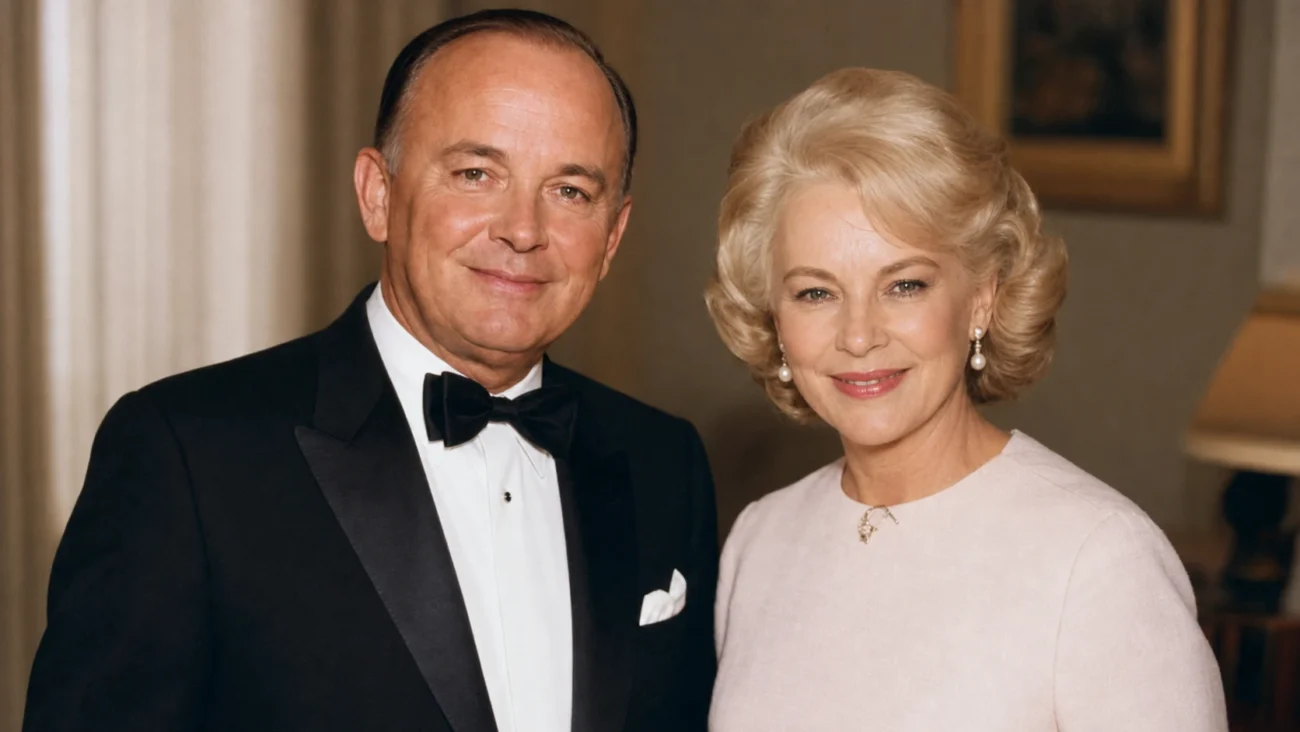
Jane Dobbins Green occupies a small but genuine place in the history surrounding Ray Kroc, the businessman who turned McDonald’s into a global restaurant company. She was Kroc’s second wife, married to him from 1963 until their divorce in 1968, during years when McDonald’s was expanding rapidly and becoming a publicly traded corporation.
Unlike Kroc’s first wife, Ethel Fleming, or his third wife, Joan Kroc, Jane left little trace in widely available biographies, interviews, company histories, or contemporary reporting. She did not become a public representative of McDonald’s, and no reliable record identifies her as a company executive, franchise operator, investor, or business adviser. Her life story is therefore defined as much by what remains private as by the few facts that have been consistently documented.
That limited record has encouraged online biographies to attach exact birth dates, career claims, family details, photographs, and financial estimates to her name. Many of those claims lack clear sourcing. A responsible biography must distinguish Jane’s confirmed place in Kroc’s life from details that have been repeated without enough evidence.
Who Was Jane Dobbins Green?
Jane Dobbins Green was the second wife of Raymond Albert Kroc, better known as Ray Kroc. He became one of the most recognizable business figures of the 20th century through his expansion of the McDonald’s restaurant system.
Reliable biographical timelines generally identify her as Jane Green and record her marriage to Kroc in 1963. The couple divorced in 1968. The fuller name Jane Dobbins Green appears often in reference summaries, although the origin of “Dobbins” is not clearly explained in the strongest publicly accessible accounts.
Jane was not the mother of Kroc’s daughter. His only widely documented child, Marilyn Kroc Barg, was born during his first marriage to Ethel Fleming. No children from Jane and Ray Kroc’s marriage have been publicly confirmed.
Her nationality is generally presumed to have been American because of her marriage and reported life in the United States, but a complete verified record of her birth, childhood, parents, and upbringing is not readily available. Exact claims about her birthplace and date of birth should be treated cautiously unless supported by vital records or other primary documentation.
Early Life and Family Background
Very little dependable information is available about Jane’s early years. Online profiles frequently state that she was born in Walla Walla, Washington, in 1911, and some provide an exact November birth date. These details have been repeated often, but the supporting records are rarely shown or clearly identified.
Her parents’ names, siblings, childhood home, and family circumstances are also not securely established in major biographies of Ray Kroc. Because Jane was not a public figure before her marriage, newspapers and business histories had little reason to document her background at the time.
The absence of a detailed childhood record does not mean Jane lacked a full personal and professional life. It means that much of it was never preserved in widely accessible public sources. Modern writers should not fill those gaps with assumptions about her personality, education, ambitions, or upbringing.
Education and Early Career
Jane’s education is not publicly confirmed. No reliable source has established where she attended school, whether she completed college, or whether she received professional training.
One of the most repeated claims about her career is that she worked as a secretary for actor John Wayne. The story appears across several recent biography websites, but it is rarely accompanied by studio records, correspondence, employment documents, or contemporary reporting that would verify it.
It is possible that Jane held secretarial or administrative work before meeting Kroc, but the specific connection to John Wayne should not be presented as settled fact without stronger evidence. A credible confirmation would require documents linking the same Jane Dobbins Green who married Ray Kroc to Wayne’s office or business affairs.
No verified acting career, entertainment credit, corporate title, or public professional achievement has been connected to her. Her public identity rests primarily on her marriage to Kroc rather than on a documented career of her own.
Marriage to Ray Kroc
Jane married Ray Kroc in 1963, two years after his divorce from Ethel Fleming. By then, Kroc had already taken control of the McDonald’s business and was overseeing a fast-growing restaurant chain.
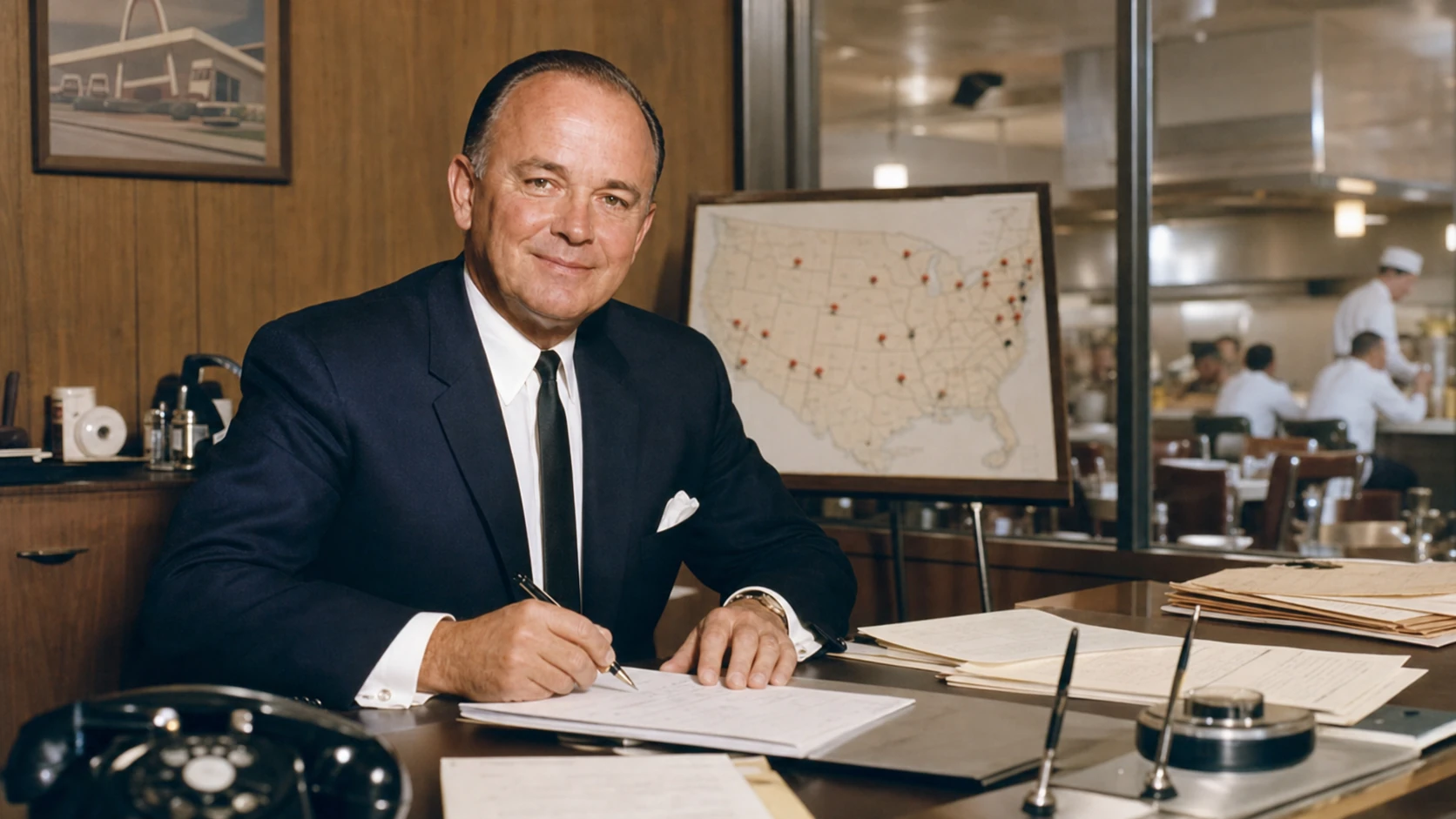
The timing of the marriage is important. Jane did not accompany Kroc during his earliest years as a struggling salesman, nor was she his wife when he first encountered the McDonald brothers’ restaurant in San Bernardino, California, in 1954. She entered his life after he had bought the brothers’ interest in the company and begun building McDonald’s under his own leadership.
During their marriage, McDonald’s underwent major growth. The company sold shares to the public in 1965, increasing Kroc’s wealth and visibility. By 1968, the year Jane and Kroc divorced, the chain had reached its 1,000th restaurant.
Those events provide the setting for their marriage, but they do not establish that Jane took part in company management. No dependable public record identifies her as a McDonald’s employee, officer, board member, franchisee, or strategic adviser.
Descriptions of Jane as the quiet force behind Kroc’s success are therefore difficult to support. She may have provided companionship or private support, as many spouses do, but the nature of their home life has not been documented through reliable interviews, letters, or firsthand accounts.
Divorce and Ray Kroc’s Later Marriage
Jane and Ray Kroc divorced in 1968 after approximately five years of marriage. Publicly available summaries do not give a detailed explanation for the breakup, and Jane’s own account has not emerged in a widely cited source.
Kroc married Joan Smith in 1969. He had known Joan for years before their marriage, and biographies of Ray and Joan describe a complicated relationship that developed while both were involved with other partners. Even so, Jane’s perspective on the end of her marriage remains unknown.
It would be unfair to reduce her story to speculation about Kroc’s romantic life. Divorce records, personal correspondence, or direct testimony would be needed to make firm claims about the couple’s disagreements, separation, or legal settlement.
The financial terms of their divorce have not been reliably published. No trustworthy figure has been established for the amount Jane may have received, any property she retained, or whether she owned McDonald’s shares.
Life After Ray Kroc
Jane appears to have returned to a private life after the divorce. She did not build a visible public career around her connection to Kroc, write a memoir, give major interviews, or publicly challenge the version of events presented in his later biographies.
Several websites claim that she married a man named Paul D. Whitney in 1984. That marriage has not been confirmed in the strongest accessible accounts of the Kroc family, and the sites repeating the claim rarely provide a marriage record or public announcement.
The same caution applies to descriptions of her later years in California. Some profiles portray her as living quietly in Los Angeles, but they offer few verifiable details about her home, work, friendships, charitable activity, or family relationships.
Jane’s disappearance from public coverage may reflect a personal preference for privacy. It may also result from the fact that journalists and biographers focused overwhelmingly on Ray Kroc’s business career and Joan Kroc’s later philanthropy. Without Jane’s own testimony, her reasons for staying out of public view cannot be known.
Reported Death and Age
Many online biographies report that Jane Dobbins Green died in Los Angeles on August 7, 2000. They often state that she was 88 years old and was buried at Westwood Memorial Park.
These details have been widely repeated, but they are not consistently supported with a published obituary, death certificate reference, probate record, or clearly authenticated cemetery entry. The reported date may be correct, but it should be described as commonly reported rather than beyond dispute.
If the frequently cited 1911 birth year and 2000 death year are accurate, Jane would have been in her late 80s when she died. Her exact age remains dependent on confirming both records and ensuring that they refer to the same Jane who was married to Ray Kroc.
There are no credible reports that she remained active in public life during the 1990s or around the time of her reported death. Her status after her divorce appears to have remained largely private.
Jane Dobbins Green’s Net Worth
Jane Dobbins Green’s net worth has not been publicly confirmed. Websites that assign her a specific fortune generally do not cite financial statements, estate records, court filings, property documents, or details of her divorce settlement.
Her marriage coincided with a period when Ray Kroc’s wealth was rising sharply. McDonald’s became a public company in 1965, and Kroc’s ownership made him increasingly wealthy. That does not reveal how much money Jane personally controlled or what she received after their divorce.
There is also no verified record showing that she continued to own McDonald’s stock after 1968. Any estimate based solely on Kroc’s later fortune would be misleading because his wealth continued to grow after their marriage ended.
The most accurate conclusion is that her assets and income were private. Her net worth should be listed as unknown rather than presented through unsupported estimates.
Public Image and Historical Reputation
Jane’s public image has been shaped almost entirely by absence. She rarely appears in major accounts of McDonald’s, and she was omitted from the 2016 film The Founder, which dramatized Ray Kroc’s rise and his relationships with Ethel and Joan.
That omission creates a simplified timeline. Viewers may assume that Kroc moved directly from his first marriage to his relationship with Joan, even though his five-year marriage to Jane came between them.
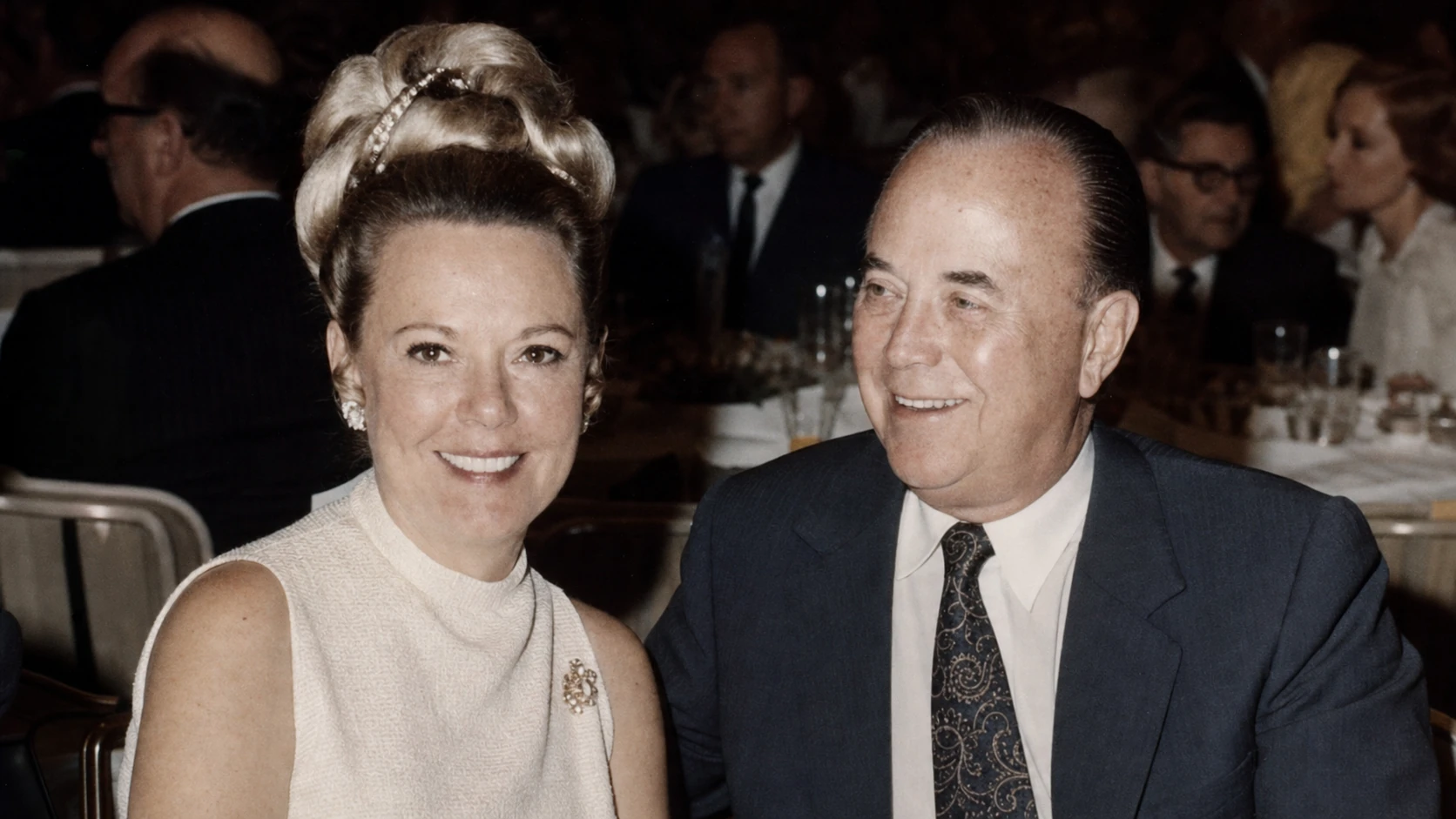
Photographs have added another layer of confusion. At least one image widely labeled online as Jane actually shows Joan Kroc with Ray. The error has been repeated by biography sites that did not verify the original caption.
No clearly authenticated public portrait of Jane has become widely recognized. Publishers should therefore avoid attaching a photograph to her name unless the image can be traced to a reliable archive, newspaper caption, family collection, or contemporary record.
Jane is sometimes described as modest, independent, reserved, supportive, or uncomfortable with fame. Those descriptions may be reasonable guesses, but they are not well documented. Her silence should not be treated as proof of a particular personality.
Why Jane Dobbins Green Still Attracts Interest
Interest in Jane comes partly from the continuing popularity of Ray Kroc’s business story. Readers who watch The Founder, study the history of McDonald’s, or read about Joan Kroc often discover that a second marriage has been left out of the better-known narrative.
Her story also illustrates the risks of online biography writing. When reliable information is scarce, copied claims can quickly begin to look like established facts. Exact dates, attractive anecdotes, emotional descriptions, and mislabeled photographs may spread across dozens of pages without any independent confirmation.
Jane matters because she was a real person whose marriage overlapped with an important period in American business history. She does not need an invented career or dramatic private story to deserve accurate treatment.
A respectful account recognizes both parts of the record: she was Ray Kroc’s second wife during McDonald’s rise, and much of her individual life remains outside public view.
Frequently Asked Questions
Who was Jane Dobbins Green?
Jane Dobbins Green was Ray Kroc’s second wife. They married in 1963 and divorced in 1968, during a period of major growth for McDonald’s.
When was Jane Dobbins Green born?
Her exact birth date has not been firmly confirmed through widely accessible primary records. Many online profiles report that she was born in November 1911 in Walla Walla, Washington, but those details should be treated with caution.
Did Jane Dobbins Green work for John Wayne?
Some websites claim that she worked as John Wayne’s secretary. The claim has not been supported publicly by strong employment records, studio documents, or contemporary reporting, so it remains unconfirmed.
Did Jane and Ray Kroc have children?
No children from their marriage have been publicly documented. Ray Kroc’s known daughter, Marilyn Kroc Barg, was born during his first marriage to Ethel Fleming.
Why did Jane Dobbins Green and Ray Kroc divorce?
The exact reasons for their 1968 divorce are not publicly confirmed. Accounts of Ray Kroc’s later relationship with Joan provide context, but Jane’s personal view of the marriage and breakup is not available.
What was Jane Dobbins Green’s net worth?
Her net worth is unknown. No reliable financial record has established the value of her assets, the size of her divorce settlement, or whether she retained any McDonald’s stock.
When did Jane Dobbins Green die?
She is commonly reported to have died in Los Angeles on August 7, 2000. Because the claim is not consistently accompanied by clear primary documentation, it is best described as reported rather than fully verified.
Conclusion
Jane Dobbins Green stands at the edge of one of America’s best-known business stories. Her marriage to Ray Kroc lasted only five years, but it covered a period when McDonald’s moved from fast expansion to public ownership and national prominence.
Her limited public record should not be mistaken for a life without substance. It reflects the way historical attention often follows famous executives while leaving spouses, relatives, and other private figures only briefly documented.
The gaps in Jane’s biography also call for restraint. Unsupported birth details, career stories, financial estimates, and photographs may create a fuller article, but they do not create a more truthful one.
What remains certain is modest but meaningful: Jane Dobbins Green was Ray Kroc’s second wife, she shared part of his life during a defining business era, and she spent the years that followed outside the public spotlight. Her reputation today rests less on celebrity than on the importance of preserving the difference between documented history and repeated assumption.
For more expert market analysis, investment strategies, and the latest digital trends, visit FundFire Insights. It is your go-to resource for staying informed and making smarter financial decisions in today’s fast-paced landscape.
