
The traditional nine-to-five job is increasingly feeling like it is not quite enough. With the rising cost of living, energy bills fluctuating, and inflation pressing down on household budgets, more Britons than ever are seeking alternative streams of income. The side hustle economy is booming, but for many, the options feel overwhelmingly uninspiring.
Until recently, the default advice for making extra money usually fell into one of two categories: joining the exhausting gig economy by driving or delivering food, or attempting to navigate the highly saturated world of dropshipping and online surveys. Both paths often lead to rapid burnout and minimal financial return.
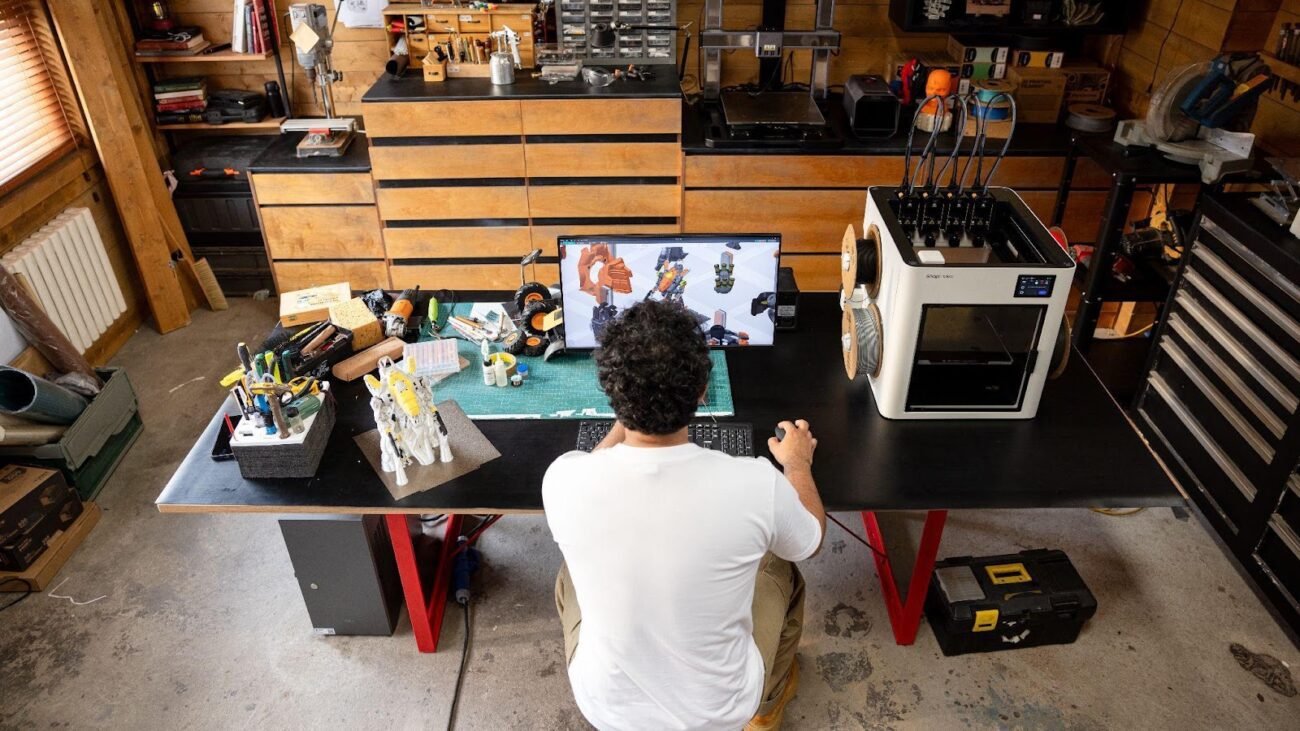
However, a quiet revolution is happening in spare bedrooms and garage workshops across the country. Savvy individuals are turning away from the gig economy and stepping into the role of modern micro-manufacturers. By leveraging accessible desktop technology, they are transforming digital designs into physical, highly profitable products. Here is why creating your own desktop tech business is the UK’s next great side hustle.
Moving Beyond the Gig Economy
The primary issue with gig economy work is that it trades your most valuable asset—your time—for a fixed, often low, hourly rate. You are constantly on the clock, burning fuel, and battling traffic. There is no scalability; you can only earn money during the exact hours you are physically working.
Home manufacturing fundamentally flips this model.
When you set up a micro-factory in your home, you detach your earning potential from your immediate physical labor. You can conceptualize a design on your laptop in the evening, send the file to your equipment, and let the machine physically produce the item while you sleep, watch television, or work your primary day job. This is not entirely passive income—it still requires marketing, packing, and maintenance—but it is highly leveraged income. You are acting as the manager of a highly efficient, automated employee that works around the clock.
The Desktop Micro-Factory Revolution
A decade ago, setting up a manufacturing business required securing a commercial lease, taking out massive business loans to purchase industrial machinery, and committing to massive minimum order quantities from overseas factories. Today, that entire production line has been condensed into machines that fit comfortably on a standard IKEA desk.
The barrier to entry has plummeted. By investing a relatively small amount of startup capital into a reliable 3D printer, anyone can begin manufacturing high-quality plastics, composites, and bespoke items on demand. Because the production is “additive”—meaning the machine only uses the exact amount of material required to build the object layer by layer—there is virtually zero waste. You only manufacture an item after a customer has already paid for it, entirely eliminating the financial risk of holding unsold inventory.
Finding Your Profitable Niche
The secret to monetizing your home tech is not printing generic, mass-produced items. You cannot compete with massive overseas factories on price when it comes to standard plastic goods like basic phone cases or simple pen holders.
To succeed in the UK e-commerce market—whether on platforms like Etsy, eBay, or your own Shopify store—you must identify a highly specific niche. People are willing to pay premium prices for items that cater directly to their passionate hobbies or solve highly specific problems.
Some incredibly profitable niches for home manufacturers include:
- Tabletop Gaming Accessories: Custom dice towers, highly detailed miniature terrain, and bespoke character trackers are massively popular in the thriving UK board game and role-playing communities.
- Sim-Racing and Flight Sim Gear: Enthusiasts spend thousands on their digital racing setups. Custom mounts, specialized button boxes, and steering wheel modifications are in incredibly high demand.
- Wedding and Event Decor: The bespoke wedding market is incredibly lucrative. Personalized cake toppers, custom table numbers, and unique party favors sell exceptionally well, especially during the spring and summer wedding seasons.
- Specialized Replacement Parts: Many vintage cars, old appliances, and retro gaming consoles have plastic brackets or gears that are no longer manufactured. Replicating and selling these rare replacement parts is a highly profitable, low-competition niche.
Standing Out in a Crowded Market
As the popularity of home manufacturing grows, simply having the equipment is no longer enough to guarantee sales. To build a sustainable side hustle, your products must stand out aesthetically.
In the past, hobbyists spent hours painstakingly sanding, priming, and hand-painting their creations to make them look professional enough to sell. This manual labor severely limited how many items a single person could produce and ship in a week.
Today, technological leaps have solved this bottleneck. By utilizing a modern multi color 3D printer, you can drastically reduce your post-processing time. Instead of printing a monochrome object and painting it by hand, you can manufacture a vibrant, finished product featuring complex patterns, embedded logos, and multiple colors in a single automated production run. This allows you to offer premium, visually stunning products that command higher prices while simultaneously reducing the manual labor required to fulfill each order.
Scaling Your Home Business
Starting small is the best approach. You do not need to quit your day job immediately. Begin by dedicating a small corner of a spare room to your setup. Focus on designing two or three highly unique products, list them online, and use social media platforms like TikTok or Instagram to document your creation process. The mesmerizing visual of a product being built layer by layer is highly engaging content that naturally drives traffic to your storefront.
As orders increase, the business model scales beautifully. If one machine maxes out its production capacity, the profits from those sales can simply fund a second machine, instantly doubling your output.
The UK economy is shifting, and the power of production is returning to the hands of the individual. For those willing to learn a new skill and lean into their creativity, monetizing desktop technology is more than just a side hustle—it is an accessible, highly scalable pathway to financial independence.
